In modern manufacturing, packaging is no longer simply the final step of putting products into bags. For many industrial and mining enterprises, packaging is an important part of the overall production process. Packaging speed, weighing accuracy, material consistency, labor requirements, and production efficiency can directly affect operating costs and product quality.
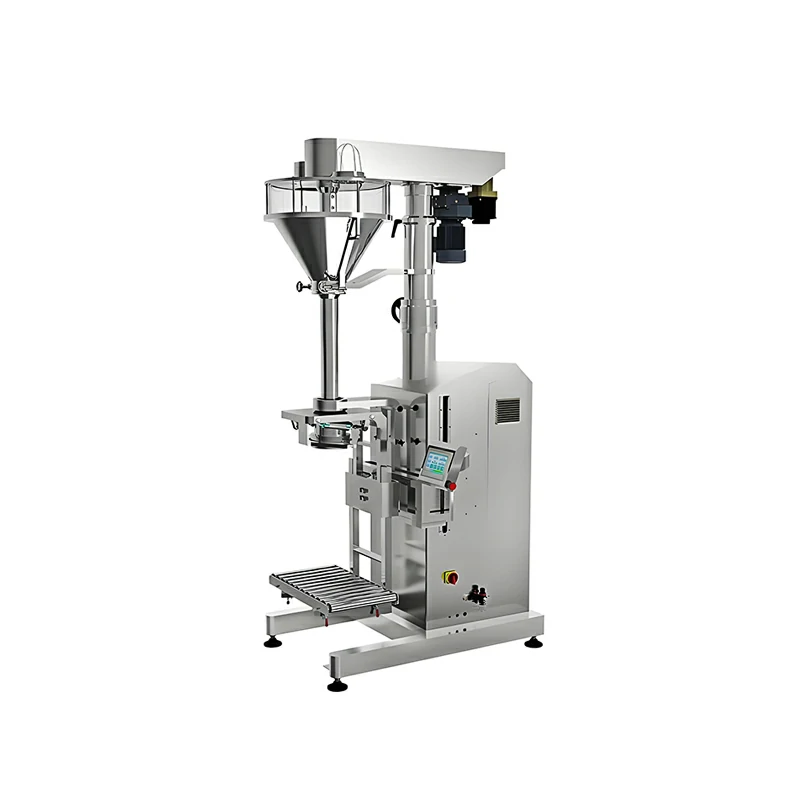
A máquina de embalagem de grânulos is designed to automate the weighing, filling, and packaging of granular materials. Compared with manual or semi-automatic packaging methods, an automatic granule packing machine can provide more consistent weighing accuracy, higher packaging efficiency, and better integration with industrial production lines.
Granular products are widely used across agriculture, food processing, chemicals, minerals, building materials, plastics, and other industries. Because different materials have different particle sizes, densities, flow characteristics, and packaging requirements, selecting the right granule packaging machine requires careful consideration of both product characteristics and production requirements.
This guide explains what a granule packing machine is, how it works, its main components, important specifications, applications, benefits, and the key factors buyers should consider when selecting automated packaging equipment.

O que é uma máquina de embalagem de grânulos?
A granule packing machine is industrial packaging equipment designed to automatically or semi-automatically weigh, fill, and package granular materials into bags or containers.
Unlike powder materials, which consist of very fine particles, granular materials generally have larger and more defined particles. Their flow characteristics can vary significantly depending on particle size, density, moisture content, and material composition.
A typical granule packing machine may perform several processes in sequence:
Material Feeding → Weighing → Bag Positioning → Filling → Bag Release → Sealing or Further Processing
Depending on the equipment configuration and production requirements, additional functions can be integrated into the system, including:
- Pesagem automática
- Quantitative filling
- Fixação do saco
- Automatic bag conveying
- Bag sealing
- Material level detection
- Recolha de poeira
- Controlo por PLC
- Automatic fault detection
- Data monitoring
- Production statistics
An automated granule packaging system can therefore become part of a larger production line rather than operating as an independent machine.
How Does a Granule Packing Machine Work?
The working principle of a granule packing machine is based on controlled feeding and accurate weighing.
Although machine designs vary, the general packaging process includes several stages.
1. Material Feeding
Granular material is transferred from a storage hopper, silo, conveyor, or upstream processing machine into the packing machine.
The feeding system must provide a stable and controlled flow of material. If the material enters too quickly or inconsistently, weighing accuracy and packaging efficiency may be affected.
2. Automatic Weighing
The machine measures a predetermined quantity of material using an integrated weighing system.
For example, the target weight may be configured according to the customer’s packaging requirements. The control system monitors the weight during filling and adjusts the feeding process when the target value is approached.
Accurate weighing is especially important for commercial products sold according to weight.
3. Bag Positioning
After the required quantity has been prepared, the packaging bag is positioned under the filling outlet.
Depending on the system design, bags may be manually placed or automatically supplied by a bagging mechanism.
4. Material Filling
The measured granular material is discharged into the bag.
The filling speed can be adjusted according to the material characteristics and production requirements.
5. Bag Handling
After filling, the bag may be released onto a conveyor for sealing, transportation, palletizing, or further processing.
In a fully automated packaging system, these processes can be integrated into a continuous production line.
What Types of Materials Can Be Packaged?
One of the advantages of a granule packing machine is its ability to handle a wide range of granular materials.
Potential applications include:
- Grânulos de plástico
- Fertilizer granules
- Agricultural products
- Sementes
- Cereais
- Ração granulada
- Mineral granules
- Grânulos químicos
- Building material particles
- Matérias-primas industriais
However, not every granular material has the same packaging characteristics.
Some materials have good flowability, while others may contain irregular particles or higher moisture levels. Some materials are abrasive, while others are sensitive to contamination.
Therefore, the appropriate feeding mechanism, weighing system, hopper design, bagging configuration, and material-contact components should be selected according to the specific material.
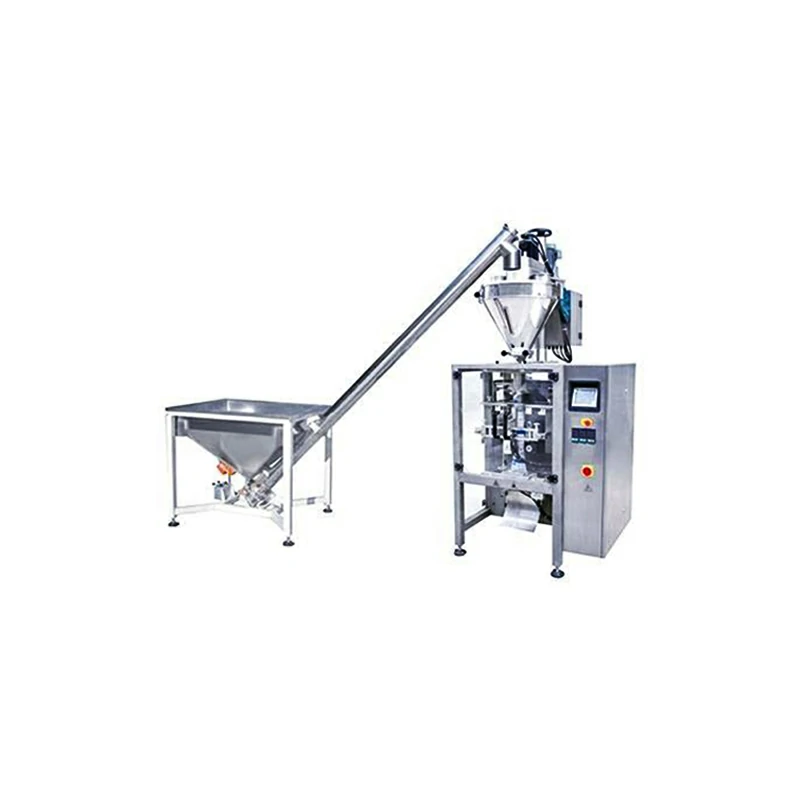
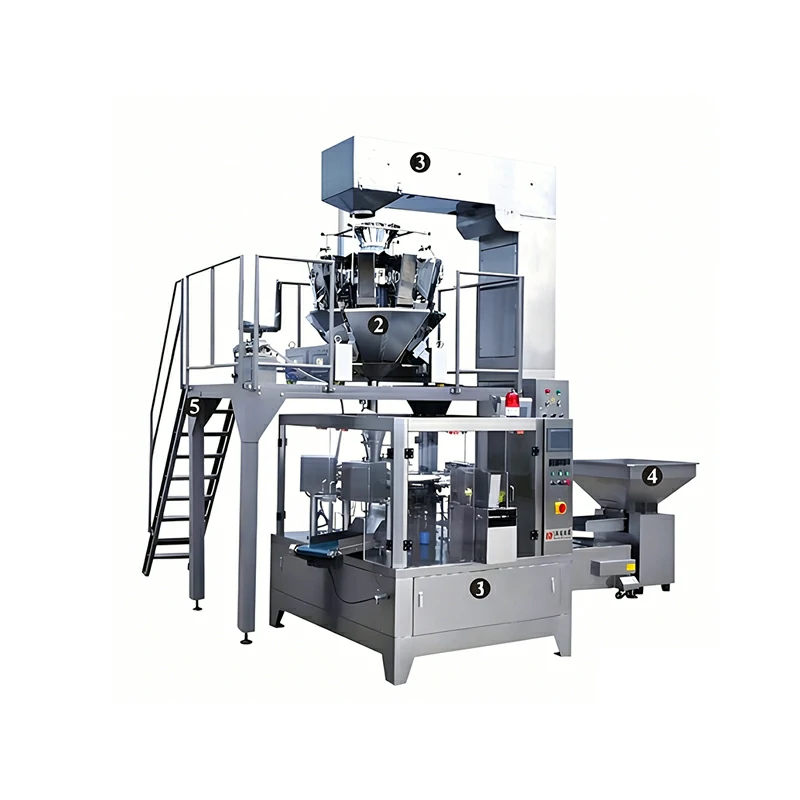
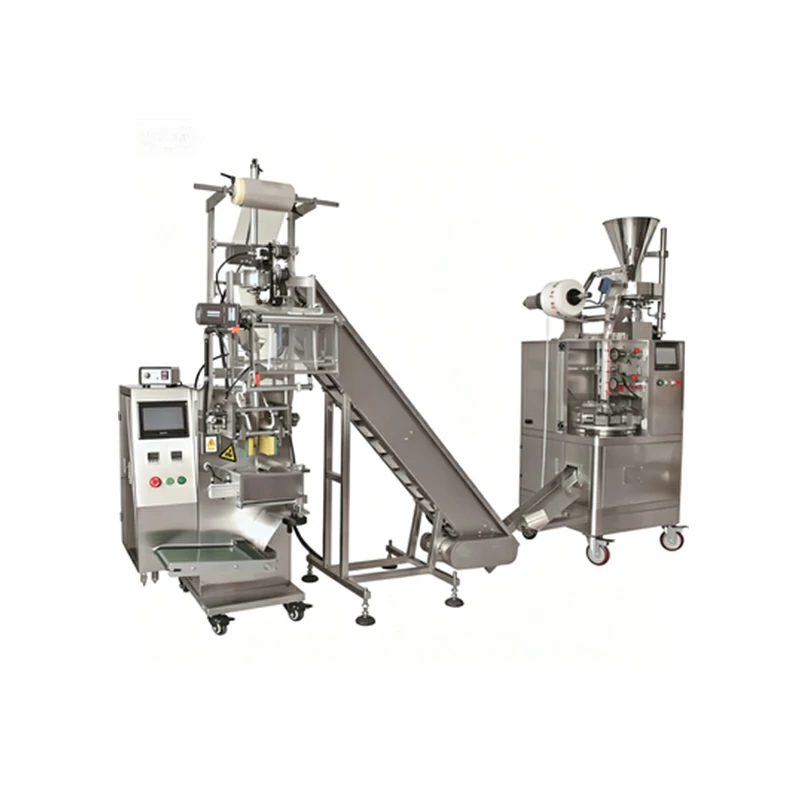
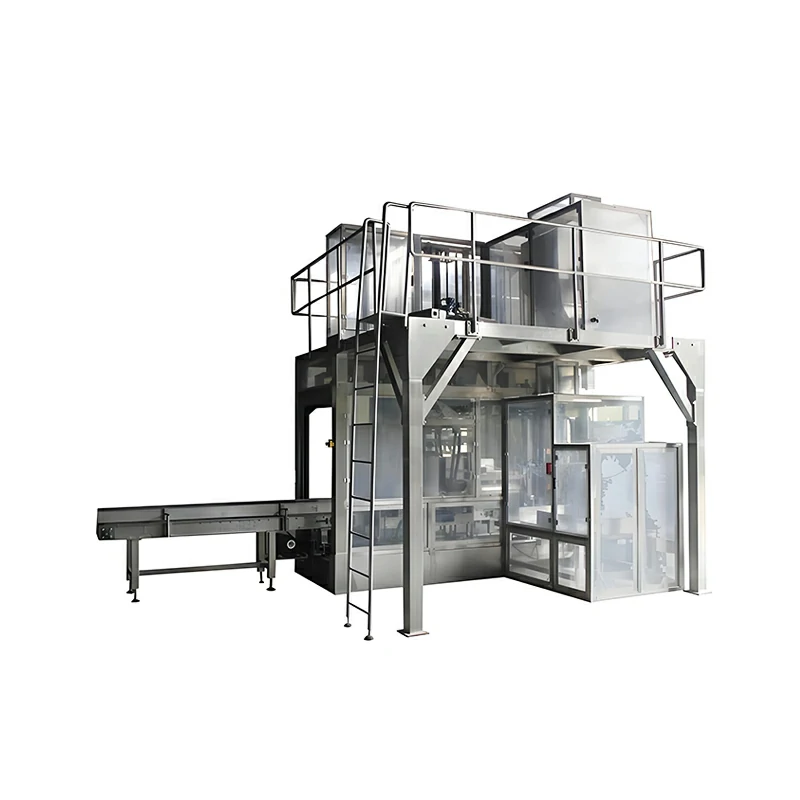
What Are the Main Components of a Granule Packing Machine?
Understanding the main components can help buyers evaluate different granule packaging machines more effectively.
Sistema de alimentação
The feeding system controls how material enters the weighing and filling section.
Stable feeding is essential for maintaining consistent packaging performance.
Sistema de pesagem
The weighing system determines the amount of material placed into each bag.
The accuracy requirement depends on the product, bag size, industry regulations, and customer specifications.
Hopper
The hopper temporarily stores material before it enters the weighing or filling process.
Its capacity and structure should match the required production rate and material characteristics.
Bag Clamping System
The bag clamping mechanism holds the packaging bag securely during filling.
A reliable clamping system helps reduce material leakage and improves packaging consistency.
Control System
Modern automatic granule packing machines commonly use PLC-based control systems or other industrial automation technologies.
Operators can configure packaging parameters and monitor machine operation through a control interface.
Conveyor System
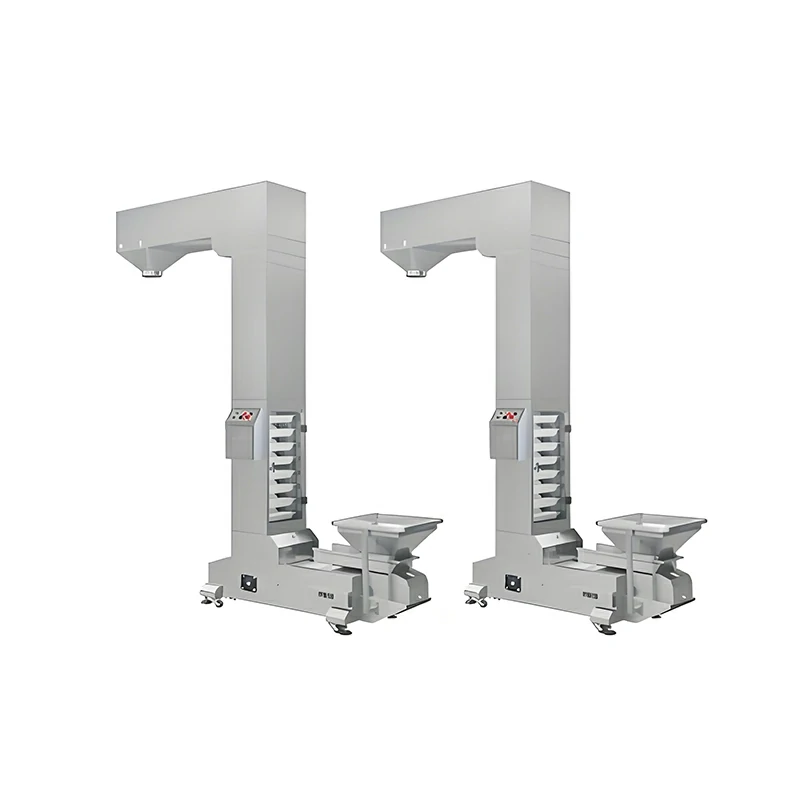
A conveyor can transport filled bags to the next stage, such as sealing, inspection, palletizing, or storage.
Sealing System
Depending on the packaging requirements, the machine can be integrated with bag sewing, heat sealing, or other closing systems.
What Are the Key Granule Packing Machine Specifications?
When comparing different granule packing machine specifications, buyers should consider more than the machine’s packaging speed.
Important parameters may include:
| Specification | Importance |
|---|---|
| Packaging weight range | Determines the suitable bag weight |
| Precisão da embalagem | Affects product consistency and material loss |
| Packaging capacity | Determines potential production output |
| Feeding method | Influences material flow and efficiency |
| Hopper capacity | Affects continuous operation |
| Bag type | Determines the compatible packaging format |
| Bag dimensions | Important for packaging compatibility |
| Automation level | Determines labor requirements |
| Power requirements | Important for installation planning |
| Machine dimensions | Important for production-line layout |
| Machine material | Important for durability and product compatibility |
The exact specifications should be selected according to the material, packaging weight, production target, and customer’s production environment.
How Does a Granule Packing Machine Improve Packaging Efficiency?
The main reason industrial enterprises invest in automated packaging equipment is to improve the overall efficiency of their production processes.
1. Higher Packaging Consistency
Manual weighing and filling can result in differences between individual bags.
An automatic weighing system can provide more consistent target weights by controlling the material feeding and weighing process.
This is particularly useful when products are sold by weight.
2. Reduced Manual Labor
Traditional packaging operations may require workers to perform weighing, bag positioning, filling, transporting, and sealing.
An automated granule packaging machine can combine several of these processes into a single system.
This reduces repetitive manual operations and allows workers to focus on machine supervision, quality control, and other production tasks.
3. Improved Production Efficiency
Automation can provide a more consistent packaging cycle.
Instead of relying entirely on manual operations, the machine can repeat predefined packaging processes according to programmed parameters.
For high-volume production environments, this can significantly improve packaging efficiency.
4. Reduced Material Waste
Accurate weighing can help reduce overfilling.
Even a small amount of excess material in every bag can become significant when thousands of bags are produced.
For industrial enterprises processing valuable raw materials, better weighing control can contribute to lower material losses.
5. Better Production Management
Modern automated packaging systems can collect and display production data.
Depending on the system configuration, operators may be able to monitor:
- Number of bags produced
- Target weight
- Actual weight
- Production rate
- Equipment status
- Alarms
- Operating time
This information can support production management and equipment maintenance.
Automatic Granule Packing Machine vs. Manual Packaging
The difference between manual packaging and automated packaging becomes more important as production volume increases.
Manual Packaging
Manual packaging typically requires workers to:
- Prepare the bag
- Measure the material
- Fill the bag
- Adjust the quantity
- Move the filled bag
- Seal the bag
This approach may be suitable for small-scale production or applications with highly variable packaging requirements.
However, manual operations can be labor-intensive and may result in inconsistent weighing and slower production.
Automatic Packaging
An automatic granule packing machine can integrate multiple operations into a controlled system.
The packaging process can become:
Feeding → Automatic Weighing → Filling → Bag Handling → Sealing → Conveying
This can improve consistency and reduce dependence on manual labor.
For companies with high-volume production requirements, automated packaging may provide significant operational advantages.
What Industries Use Granule Packaging Machines?
Granule packaging equipment can be used in many industrial applications.
Agricultura
Agricultural products such as seeds, fertilizer granules, and certain feed products can require accurate weighing and efficient bagging.
Food Processing
Certain grains, cereals, beans, and other granular food products can be packaged using specialized equipment designed according to hygiene and material requirements.
Indústria química
Chemical granules may require controlled packaging environments and appropriate material-contact components.
Plastics Industry
Plastic pellets and granules are commonly transported and stored in bags or other containers.
Exploração Mineira e Tratamento de Minerais
Mineral products and granular industrial materials may require automated weighing and bagging before transportation or further processing.
Building Materials
Some granular or particle-based building materials can also be packaged using automated equipment.
The exact packaging system should always be customized according to the physical characteristics of the material and the customer’s production requirements.
How to Choose the Right Granule Packing Machine?
Selecting a suitable machine requires a clear understanding of the production process.
1. Identify the Material Characteristics
Before choosing equipment, determine:
- Tipo de material
- Particle size
- Bulk density
- Moisture content
- Flowability
- Abrasiveness
- Temperature
- Whether dust is generated
These characteristics can affect the feeding and weighing system.
2. Determine the Required Packaging Weight
Packaging requirements can vary considerably.
For example, a customer may require small retail bags, medium industrial bags, or larger bulk packages.
The machine should therefore be selected according to the required weight range and bag format.
3. Determine Production Capacity
Calculate how many bags need to be produced per hour or per day.
Por exemplo:
Required Daily Output ÷ Working Hours = Required Average Hourly Capacity
The machine should provide sufficient capacity to meet the production target while allowing reasonable time for maintenance and operational interruptions.
4. Decide the Required Automation Level
Not every production line requires the same level of automation.
Possible configurations include:
- Manual bag placement with automatic weighing and filling
- Semi-automatic packaging
- Fully automatic packaging
- Integrated automatic packaging lines
For high-volume industrial production, a higher level of automation may provide better long-term efficiency.
5. Consider the Available Space
Machine dimensions and layout should be considered before installation.
If the granule packing machine is connected to conveyors, storage silos, sealing equipment, palletizers, or other equipment, the complete production-line layout should be planned in advance.
6. Consider Future Production Requirements
When purchasing industrial packaging equipment, it is useful to consider potential future expansion.
If production volume is expected to increase, the packaging system should ideally have sufficient flexibility for future upgrades or integration with additional equipment.
Can a Granule Packing Machine Be Integrated Into an Automated Production Line?
Yes. A granule packing machine can be integrated into a broader automated production system.
For example, a complete process may include:
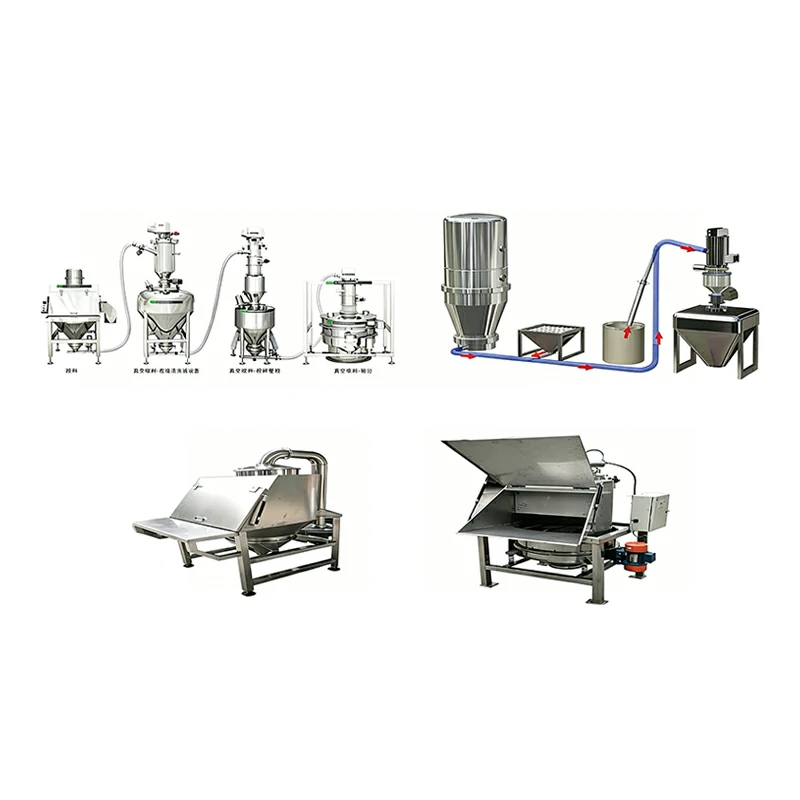
Raw Material Storage → Feeding → Processing → Screening → Storage → Automatic Weighing → Granule Packing → Sealing → Conveying → Palletizing
This type of integrated system can reduce manual material handling and create a more continuous production process.
For industrial and mining enterprises, customized production line solutions can be designed according to:
- Raw material characteristics
- Capacidade de produção
- Requisitos de embalagem
- Planta da fábrica
- Requisitos de automatização
- Product specifications
- Labor conditions
This is particularly important when a standard standalone machine cannot fully satisfy the customer’s production requirements.
How Does Packaging Automation Support Smart Factories?
Packaging is increasingly becoming part of the broader digital transformation of manufacturing.
A modern automated packaging system can potentially communicate with other production equipment and management systems.
For example, packaging data can be used to monitor:
- Production volume
- Packaging efficiency
- Equipment status
- Material consumption
- Production schedules
- Machine alarms
When packaging equipment is integrated with upstream and downstream production systems, manufacturers can move toward more intelligent production management.
This makes automated packaging equipment an important component of a modern smart factory.
Por que as soluções de embalagem personalizadas são importantes
Every factory has different production requirements.
A standard granule packing machine may be sufficient for some applications, but complex industrial projects may require a customized solution.
A customized packaging system can take into account:
- Existing production equipment
- Factory dimensions
- Propriedades dos materiais
- Packaging materials
- Required production capacity
- Automation level
- Product weight
- Transportation system
- Sealing requirements
- Future expansion
For this reason, industrial buyers should communicate their complete production requirements to the equipment manufacturer before purchasing.
A professional manufacturer can evaluate the production process and recommend suitable equipment configurations rather than simply supplying a single machine.
Why Choose a Professional Automated Packaging Equipment Manufacturer?
When purchasing industrial packaging machinery for an overseas project, the equipment itself is only one part of the decision.
Buyers should also consider the manufacturer’s engineering capability, customization experience, production capacity, technical support, and ability to provide complete solutions.
A professional supplier should be able to provide support throughout different stages of a project, including:
- Requirement analysis
- Process design
- Equipment selection
- Production-line design
- Fabrico de equipamentos
- Integração de sistemas
- Factory testing
- Apoio à instalação
- Commissioning
- Formação técnica
- After-sales service
This approach can be particularly valuable for B2B customers looking for a complete automated production line rather than an individual machine.
Granule Packing Machine Applications at a Glance
A granule packing machine can be used when a production process requires accurate weighing and efficient packaging of granular materials.
Typical applications include:
Agriculture: seeds, fertilizers, feed pellets
Food: grains, beans, cereals, and other granular products
Chemical: chemical granules and industrial raw materials
Plastics: plastic pellets and granules
Mining: mineral materials and granular products
Building Materials: selected granular and particle-based materials
The actual machine configuration should be selected according to material characteristics and production requirements.
Frequently Asked Questions About Granule Packing Machines
What is a granule packing machine?
A granule packing machine is automated packaging equipment designed to weigh, fill, and package granular materials into bags or containers. Depending on its configuration, it can also perform bag conveying, sealing, and other packaging operations.
What is the difference between a granule packing machine and a powder packing machine?
Granular materials and powders have different flow characteristics. Granule packing machines are designed for materials with larger particles, while powder packing machines are generally configured to handle fine and dusty materials. Feeding, weighing, and dust-control systems may therefore differ.
What materials can a granule packing machine handle?
Depending on the machine configuration, granular packaging equipment can be used for products such as fertilizer granules, seeds, grains, feed pellets, plastic granules, mineral products, and other industrial granular materials.
How accurate is an automatic granule packing machine?
Packaging accuracy depends on the weighing system, material characteristics, target weight, feeding method, machine configuration, and operating conditions. Buyers should review the manufacturer’s technical specifications for the specific equipment model.
Can a granule packing machine be customized?
Yes. Industrial packaging systems can be customized according to material characteristics, packaging weight, production capacity, bag dimensions, automation requirements, factory layout, and other project-specific requirements.
Can a granule packing machine be integrated with a production line?
Yes. A granule packing machine can be integrated with feeding systems, storage equipment, conveyors, sealing machines, palletizing systems, and other upstream or downstream equipment to create an automated packaging or complete production line.
What should I consider before buying a granule packing machine?
Important factors include material characteristics, packaging weight, required production capacity, packaging bag type, weighing accuracy, automation level, factory space, power requirements, maintenance, spare parts, and technical support.
Conclusão
A máquina de embalagem de grânulos is more than a simple bag-filling device. As an important part of modern industrial packaging automation, it can combine weighing, filling, bag handling, sealing, conveying, and data monitoring into a more efficient production process.
For manufacturers and industrial enterprises, the right automated granule packaging system can help improve packaging consistency, reduce repetitive labor, minimize material waste, and support higher production efficiency.
However, there is no single machine configuration suitable for every application. The ideal solution depends on the material, packaging weight, production capacity, factory layout, automation requirements, and future production plans.
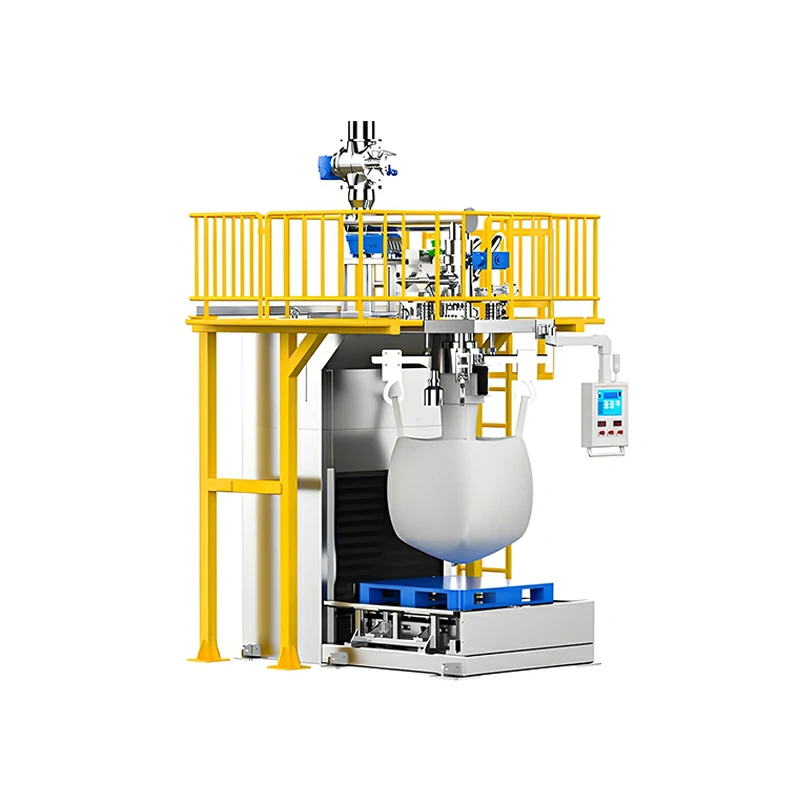
Hefei Weite Electromechanical Equipment Manufacturing Co., Ltd. focuses on the R&D, design, manufacturing, and system integration of automated production equipment and complete production lines. Its product range includes Granule Packing Machine, Powder Packing Machine, Máquina de embalagem de sacos por tonelada, Máquina de desempacotamento de sacos a granel, Automated Packaging Unit, Stereoscopic Lifting Container, e Equipamento auxiliar.
For customers with complex industrial packaging requirements, Weite can develop customized equipment configurations and integrated production line solutions based on specific production processes and project requirements.
If you are planning to automate your granule packaging process or need a customized automated packaging solution, providing information about your material, packaging weight, production capacity, and existing production line can help determine the most suitable equipment configuration.


 embaladora.webp)